Redefining Retail Spaces in the Digital Age
Something fundamental has changed about the way we experience physical spaces. The brands that truly understand this feel different the moment you step inside their stores. Not just visually, but in every sense. The way a space smells, sounds, the texture of its surfaces, the pace at which it moves you through. All of it working quietly in the background, shaping how you feel about a brand long before a single word is exchanged.
For years, the conversation around brick-and-mortar retail was dominated by one question: can it survive the digital age?E-commerce didn’t kill retail. It raised the bar. When buying something takes seconds online, choosing to walk into a store becomes a conscious act. And conscious acts demand a reason.
That reason is rarely about convenience anymore.Convenience is a commodity, and the internet does it better than any store ever could. What physical retail offers, when done right, is something far more complex and far more human. Atmosphere. Narrative. The kind of sensory experience that lodges itself in memory and builds the emotional connection that no algorithm has yet learned to replicate.
The brands navigating this shift successfully aren’t just redesigning their spaces. They’re rethinking what a store isfor. A physical environment has become the most tangible expression of who a brand is, what it stands for, and who it exists to serve. Every material, every light source, every scent and sound is part of a carefully considered language. One that speaks directly to the customer, often without them even realizing it.
In this article, we’ll explore how retail design is evolving to meet this new reality, and what it takes to build spaces that don’t just attract customers, but give them a reason to return.

1. The Shift:
Why Physical Retail Had to Change
The rules of retail didn’t change overnight. They eroded gradually, purchase by purchase, scroll by scroll, until one day the old playbook simply stopped working. A well-located store, a decent product range, and a loyal customer base were no longer enough. Something more fundamental had shifted – not just in the market, but in people themselves.
Today’s customer walks into a store already informed. They’ve researched the product, compared the prices, read the reviews. The store is no longer the beginning of their journey. In many cases, it’s the final test. A moment where the brand either earns their trust in person or loses it forever.
This is the shift that changed everything. Retail spaces are no longer competing with other retail spaces.They’re competing with the seamless, frictionless, endlessly convenient experience of buying online. And the only way to win that competition is to stop playing by the same rules entirely.
The stores that are thriving today have accepted something that others are still reluctant to admit: that the purpose of a physical space is no longer primarily transactional. It is experiential, emotional, and deeply human. A place where a brand’s values stop being abstract and start being felt.

2. From Transaction to Experience:
The New Role of the Store
For decades, the store had one job: sell as much as possible to as many people as possible. How many people walked in, how many products moved off shelves, how quickly a transaction was completed. The store was a machine, and efficiency was its highest virtue.
That model didn’t just become outdated. It became irrelevant.
When e-commerce removed friction from the buying process entirely, the transactional store lost its primary argument. The brands that responded by optimizing the same model, faster checkouts, better layouts, more products, found themselves solving the wrong problem. Best Buy learned this the hard way. In the early 2010s, customers would walk into their stores, spend time with the products, get informed by the staff, and then go home and order the same item on Amazon for less. Best Buy had become a victim of “showrooming,” their physical space effectively serving as a free product discovery service for a competitor. Faced with near collapse, Best Buy made a decision that would define its future: instead of competing on price or convenience, it leaned into the one thing Amazon fundamentally could not offer. Physical presence. The ability to actually touch, hear, feel, and experience a product before committing to it. You cannot feel the weight of a camera in your hands online. You cannot hear how a speaker fills a room. You cannot run your fingers across a fabric and know immediately whether it’s worth the price.That sensory moment, when a customer connects with a product in person, is the one advantage no algorithm can replicate. Best Buy restructured its entire spatial and human experience around that insight, and it turned the company around.
But surviving a crisis and building something lasting are two different things. Patagonia never needed a turnaround because it was never built around transactions to begin with. Their stores are not primarily places to buy jackets. They are physical expressions of a belief system. Every material, every piece of communication, every spatial and visual decision tells the same story with the same conviction. A story about responsibility, about longevity, about consuming less and choosing better. And because that story is consistent, honest, and lived rather than merely communicated, it has attracted a following that goes far beyond customer loyalty. People don’t buy Patagonia because they need outerwear. They buy it because it reflects who they are, or who they want to be.
Today’s consumers, especially younger generations, don’t just buy from brands. They align with them. And they are remarkably good at telling the difference between a brand that stands for something and one that merely says it does.
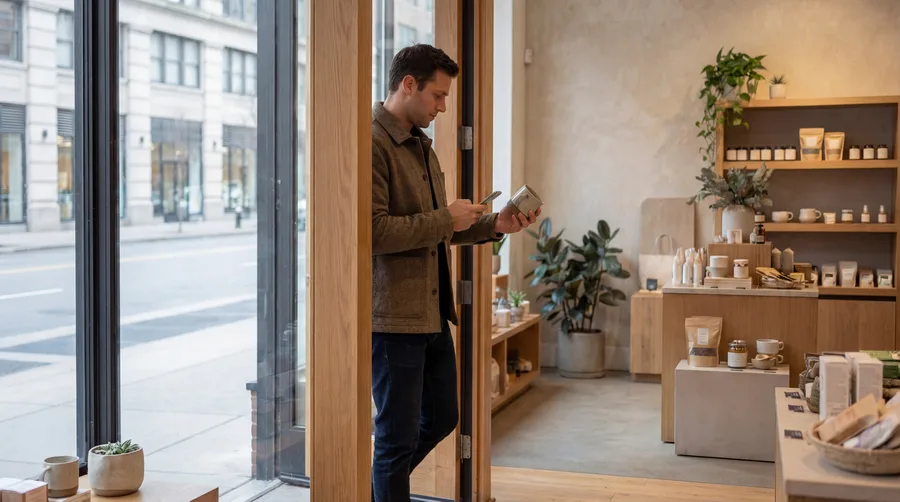
This shift changes everything about how physical retail must be approached. A store is no longer a distribution point dressed up with good lighting. It is the most honest thing a brand can show about itself. Every decision, from materials to
layout to the behavior of the people working there, either builds or erodes the story a brand is trying to tell.
Delivering a greatcustomer experience is no longer a differentiator.It is the price of entry.
3. Design as a Strategic Tool
If great customer experience is the price of entry into the market, design is the language in which that experience is written.
Today’s customer arrives informed. Before they walk through the door, they have already encountered the brand on Instagram, watched the campaign, read the reviews, formed an expectation. The physical space either meets that expectation or it doesn’t.
The gap between what a brand promises online and what it delivers in person is where trust goes to die.
But design as a strategic tool is not about closing gaps. It is about making a deliberate choice about what a space is actually there to do. That question sounds simple. Most brands never truly answer it.
Muji has been answering it the same way for over four decades. Their name, Mujirushi Ryohin, translates as “no-brand quality goods,” and that is not a marketing position. It is a philosophy that runs through every spatial decision they have ever made. No logos, no promotional noise, no urgency. What remains is a space built around the Japanese concept of “Ma,” the idea that meaning lives not in things themselves but in the space between them. In a retail landscape engineered for overstimulation, that restraint is a radical act. And because it is total, consistent across every store, every market, every touchpoint, it has become one of the most recognizable identities in global retail without ever raising its voice.
Uniqlo considers itself a technology company that makes clothing, and their stores are built to prove it. The HeatTech wall is not a display. It is a demonstration, a physical argument for why a garment that looks unremarkable can perform in conditions from deep winter to summer humidity.When the store becomes a place where technology stops being a claim and starts being something a customer can actually feel, price comparison becomes almost irrelevant. You are no longer selling a product. You are selling understanding.
Warby Parker closes the argument from the most unexpected angle. Born entirely online, built without a single physical location, they disrupted an industry and built a loyal following through a screen alone. And then they opened stores anyway. Not because the model failed, but because they kept hitting the same moment of friction: a customer ready to commit who needed to try the frames in real light, feel the weight, see the fit. No digital tool has resolved that moment completely, and Warby Parker was honest enough to admit it. Their physical locations don’t compete with their online business. They complete it, with the majority of in-store customers having visited the website first.
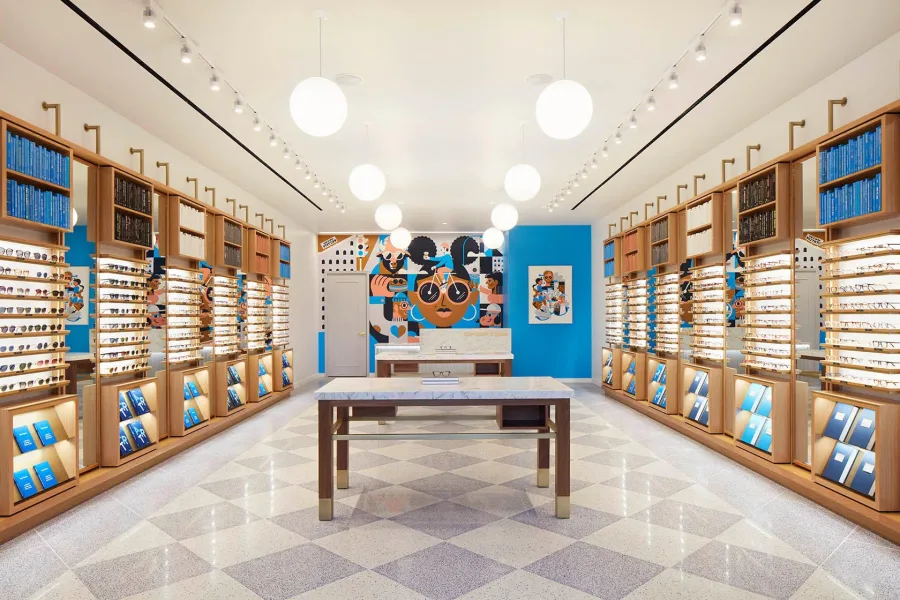
Source: Warby Parker
Online and physical retail are not competitors. In the hands of a brand that understands what each channel does best, they are the same conversation.
4. The Human Element
Brands will spend months designing a space that communicates exactly the right feeling, then staff it with people who have no idea what that feeling is supposed to be. The space says one thing. The people say another. The customer, who feels everything, notices immediately.
This is the most expensive mistake in retail. And the most common.
As the industry races to automate and reduce the cost of human interaction, something counterintuitive is happening. Nearly half of consumers today cite the inability to reach a real person as their single biggest frustration with brands. The brands that recognize this are moving deliberately in the opposite direction. Nordstrom eliminated automated phone systems entirely. No IVR, no press-1-for-this. Their reasoning is disarmingly simple: in a world changing at this speed, people gravitate toward feeling known. That is not a nostalgic position. In 2026, it is a competitive one.
Lush arrived at the same conviction through a more radical act. In 2021, they walked away from Facebook, Instagram, TikTok and Snapchat entirely, absorbing a projected $13 million loss. Their argument was straightforward: if the brand’s promise was human connection and genuine care, building that promise on platforms engineered for passive scrolling was a contradiction they were no longer willing to sustain. The budget went back into their people and their stores. That Christmas saw their strongest sales in two years. The sticker on every Lush product showing the face and name of the person who made it is not a marketing detail.It is a declaration of what the brand actually believes: that the human being behind the product matters as much as the product itself.
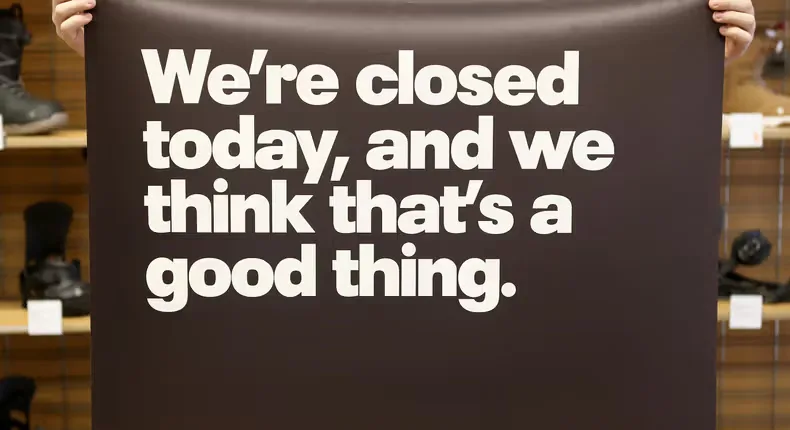
Source: REI optoutside
REI has built the same logic into the DNA of how they hire. Every employee is an outdoor enthusiast, not by requirement but by design. REI actively seeks people who already live what the brand sells, and then builds around that. Employees receive a paid day each year simply to go outside. They receive gear discounts that make the products part of their own lives. The result is a staff turnover rate of 27% in an industry where the average sits at 60%. That gap is not a human resources achievement. It is the measurable consequence of treating people as the foundation of the experience rather than its most replaceable component. And it shows. A customer asking an REI employee about a trail, a boot, or a sleeping bag in minus ten degrees is not talking to someone running through a product script.They are talking to someone who has been there. That difference is felt immediately, and it is the one thing no competitor can copy by redesigning their store.
Gallup’s research across 183,806 business units worldwide puts a number on what REI already knew intuitively. Highly engaged teams deliver 23% higher profitability and 18% higher productivity than their disengaged counterparts. These are not soft metrics. They are the direct financial return on a decision that most retailers still treat as a cultural nicety rather than a business imperative.
This is what the human element actually means in retail. Not that people are important, which is obvious, but that a motivated, knowledgeable, genuinely engaged person standing in a well-considered space becomes something else entirely. They become the living proof of what the brand claims to be.
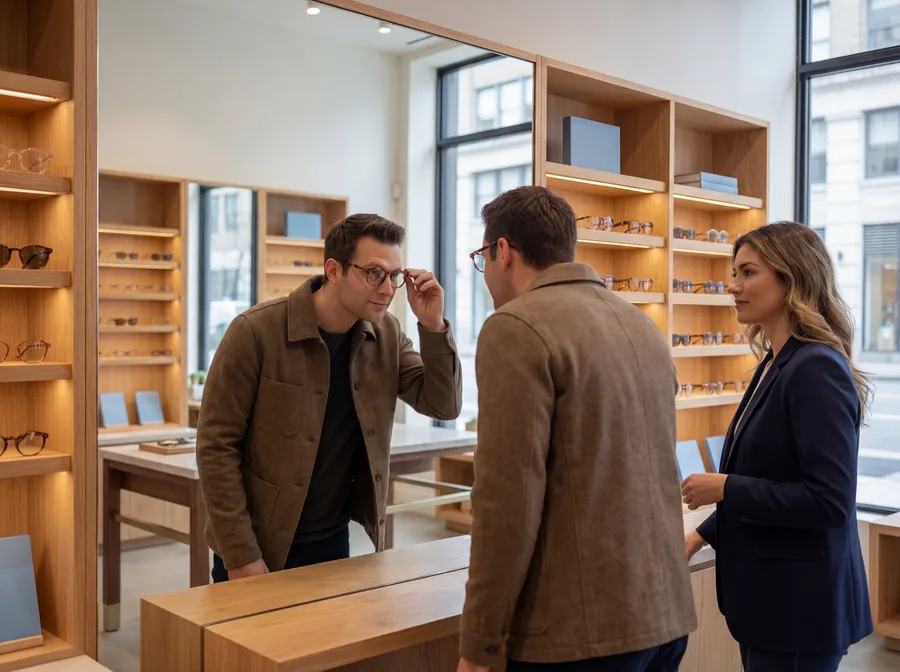
The space sets the context. The person makes it real. And when a customer walks away from that interaction having felt genuinely understood, something shifts. They don’t just remember the product. They remember the brand. And that memory is worth more than any campaign, any window display, any perfectly engineered layout could ever manufacture alone.
5. The Integrated Experience
A customer who sees a product on Instagram, tries it in store, and buys it through the app has not navigated three channels. They have had one experience with one brand. The technology behind it is irrelevant to them. What they remember is whether the brand felt consistent, or whether something, somewhere, broke the spell.
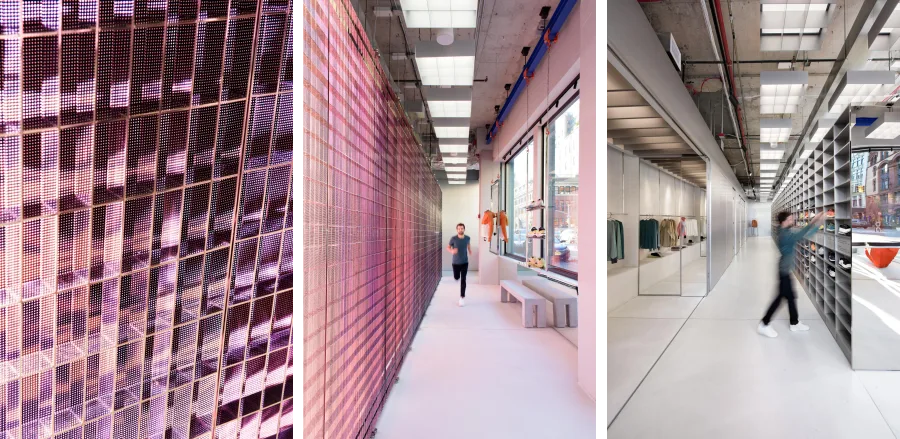
The most interesting retail spaces being built today are those where that spell is kept intact not through seamless digital interfaces, but through the physical environment itself becoming smarter, more responsive, and more deeply connected to what a customer actually needs in that moment. On Running’s flagship on Regent Street in London makes this literal. Walk eight metres in front of the Magic Wall and invisible floor sensors capture your gait, stride length, ground contact time, ankle roll and push-off force in eight seconds. A database of over 52,000 runs processes the data instantly and recommends the right shoe from a wall that carries every model, every size, stored in concealed drawers that open on demand. No waiting for a stock room run. No guessing. The adviser stays with you the entire time because the wall does the logistics.
Source: PRESS
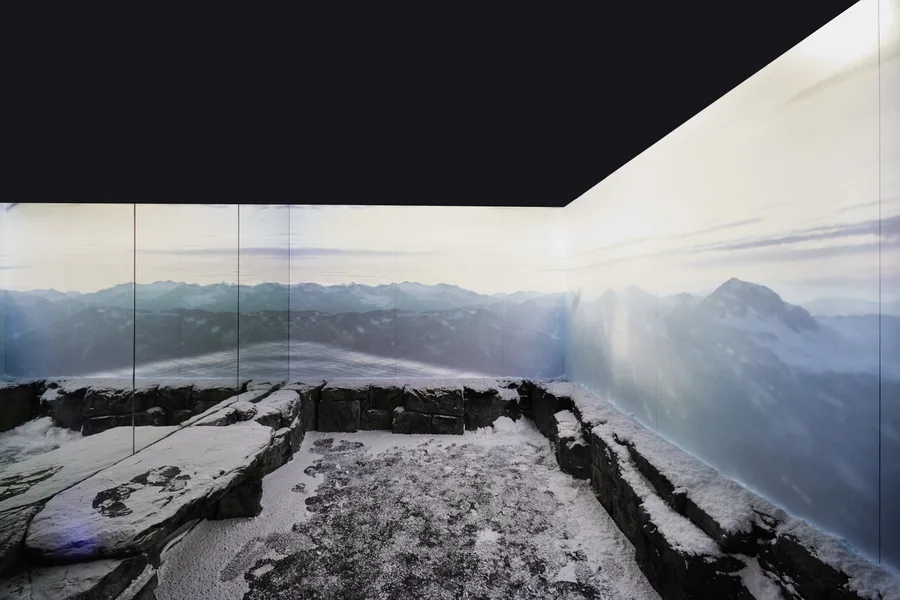
Canada Goose answers a different question with the same logic. Their Cold Rooms drop to -25°C with wind chill simulation at the push of a button. You try on a jacket that costs over a thousand euros in the conditions it was actually designed for. Not in a well-lit store where everything feels warm and theoretical, but in the cold where the decision makes itself. Carrefour Flash in Paris removes the question entirely. Sixty cameras and 2,000 shelf sensors track every item you pick up, build your virtual basket in real time, and charge you on the way out. No scanning, no registration, no app required before you enter. Ten seconds to shop, ten seconds to pay. The store has learned to get out of its own way.
Source: CNW Group/Canada Goose
What Ralph Lauren did with their fitting rooms points in a different direction but with the same intent. Every garment carries an RFID chip. The moment you walk into a changing room the mirror identifies everything you brought in, displays it on screen, and offers other sizes, colours and complementary pieces with a single touch. You adjust the lighting to simulate the restaurant you’re dressing for or the daylight of a Sunday afternoon. You request a different size without stepping out. You pay without visiting a register. The fitting room, historically the moment a customer goes invisible to the brand, becomes the most connected point in the entire journey.
Sephora’s Color IQ device scans your skin, assigns it a precise number, and pulls every matching foundation and concealer in the store instantly. No more guessing. No more trying ten shades on the back of your hand.
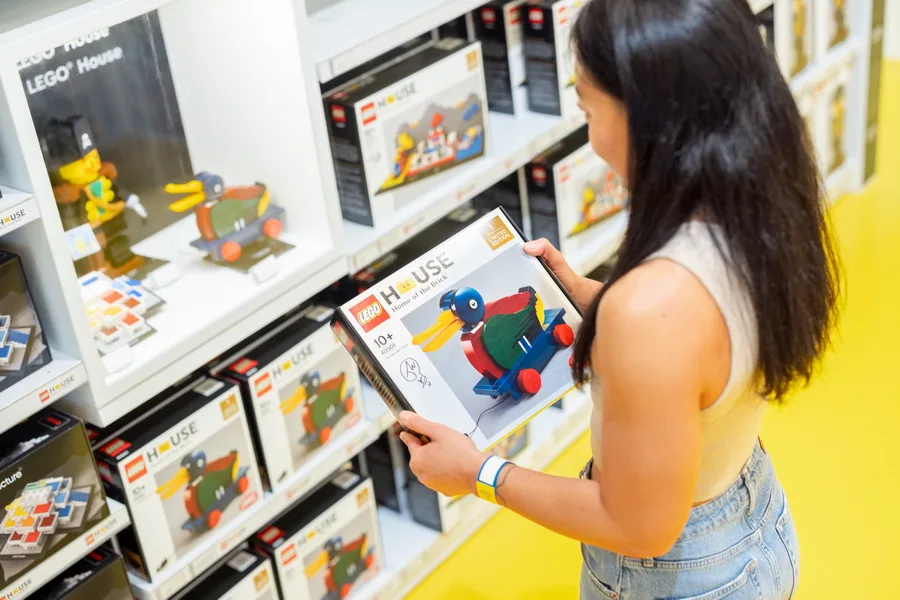
LEGO’s Digital Box shows children a 3D animated model of the fully assembled set the moment they hold the box in front of a screen, rotating as the box rotates, revealing details and dimensions that no photograph on the packaging ever could. And Home Depot, whose stores carry around 35,000 products across enormous floor space, built indoor navigation directly into their app so a customer searching for a specific screw is guided to the exact aisle and bay, not the general direction of hardware.
Source: Lego
None of these are technology for its own sake. Each one exists because someone asked a specific question about what the customer actually needs at a specific moment in their journey, and found a way to answer it. And that shift in thinking, from space to moment, from location to experience, has expanded the boundaries of retail further than most brands have yet realized.
Click and collect is the clearest proof. A customer who picks up their order from an InPost locker, a local café, or a petrol station is having a brand experience without ever entering a store. The sale happens where it suits the customer best. The experience happens there too.
This is why the most forward-thinking brands no longer talk about retail space. They talk about retail environment. The difference is not semantic. A space has walls and an address. An environment has no boundaries. It exists wherever the customer is, and it carries the brand’s story into every one of those moments.
This is how brands stop being a choice and start being a habit.
6. Sustainability as a Design Value
Sustainability in retail has a credibility problem. For years it existed as a layer of green paint applied over business as usual. A recycled bag here, a carbon pledge there. Enough to appear responsible without changing anything fundamental. Consumers, especially younger generations, have become remarkably good at spotting the difference. And the brands that treated sustainability as a communications strategy rather than an operating principle are now paying for it in the only currency that matters: trust.
The brands winning on this front share one thing. Their physical spaces don’t communicate sustainability. They practice it, visibly, daily, in front of the customer.
In a Patagonia store, the most prominent feature is not a rack of new arrivals. It is a repair counter. Customers bring in torn jackets, worn-out zippers, frayed seams, and leave with something restored rather than replaced. Digital screens beside the counter show stories of specific garments, some thirty years old and still in use. The message is not subtle: our success is not measured by how much we sell you, but by how long what you already own continues to serve you.
Nudie Jeans built the same conviction into every location they have ever opened, with repair shops where any pair of their denim can be mended for free, for life, while in their Shoreditch store passersby can watch the restoration process through the window from the street.
Veja took a different position entirely. Their Berlin store accepts and repairs shoes from any brand, a declaration that their commitment to reducing waste extends beyond their own products and into the industry as a whole.
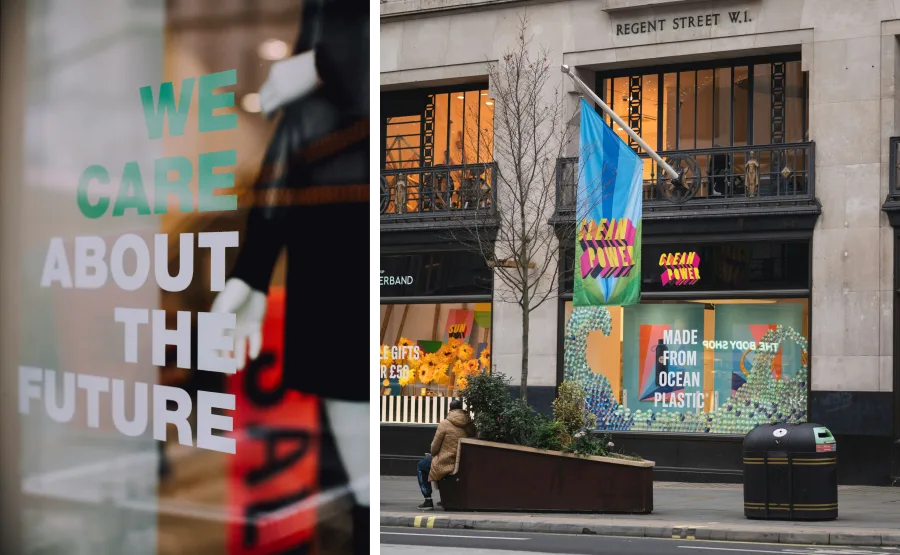
Allbirds made transparency the design principle of their entire store. Every product carries its exact carbon footprint on a physical label and on digital displays. Interactive installations let customers handle the raw materials, wool, sugarcane fiber, eucalyptus, that go into each pair of shoes before they decide. Lush eliminated packaging entirely in their Naked shops, replacing product labels with an AI app called Lush Lens. The digital tool exists not as a feature but as a direct substitute for waste.
IKEA’s Vienna Westbahnhof store has no car park. Everything that doesn’t fit in a bag is delivered same-day by electric vehicle. The roof is a public park with 160 trees that cool the building and the surrounding neighborhood, turning the store into something the city actually needs.
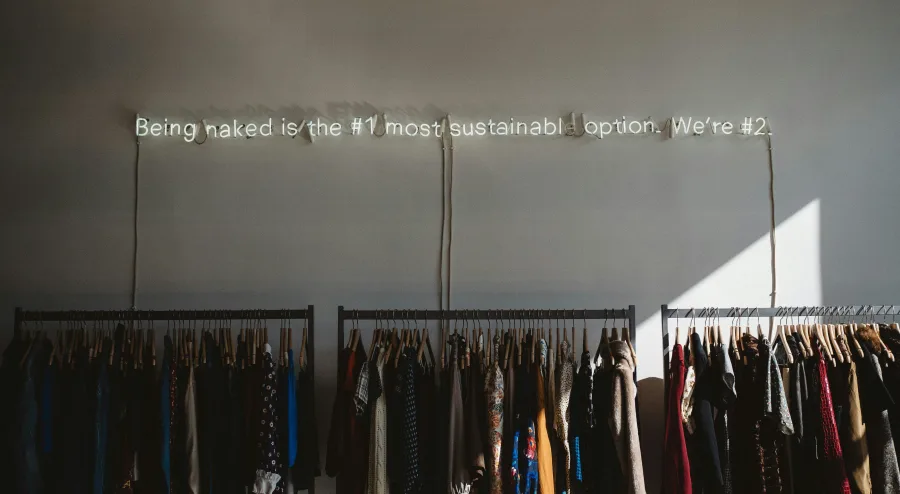
What separates these brands from the ones drowning in greenwashing accusations is not the scale of their ambition. It is the consistency between what they say and what they do. Seventy percent of millennials and Gen Z say they would pay more for sustainable products, but the same research consistently shows they will punish brands they perceive as inauthentic far more harshly than brands that make no sustainability claims at all.
The customer doesn’t demand perfection. They demand honesty. And in a physical space, honesty has nowhere to hide.
7. What the Future Retail Space Looks Like
The retail environment of the near future will be defined by its refusal to stand still. Experiential retail is already reshaping what a store is expected to deliver, not just products, but reasons to stay. Community-oriented programming, from integrated cafés to wellness studios, is turning commercial floors into social infrastructure. Multi-sensory design layered with ambient scent, adaptive lighting, and curated soundscapes is becoming a serious discipline within retail architecture, not a gimmick. And modularity, interiors built to reconfigure in hours, not weeks, is giving brands the agility to respond to campaigns, seasons, and cultural moments without a full refit.
At the same time, the boundary between digital and physical commerce is dissolving into something more fluid. Augmented reality is moving out of novelty territory and into practical application: fitting rooms that let customers visualize products in context before committing, checkout systems that eliminate queuing entirely through computer vision, and real-time personalization engines that adjust offers and recommendations based on proximity and behavior. None of this is speculative. The infrastructure already exists. The question is how thoughtfully it gets implemented.
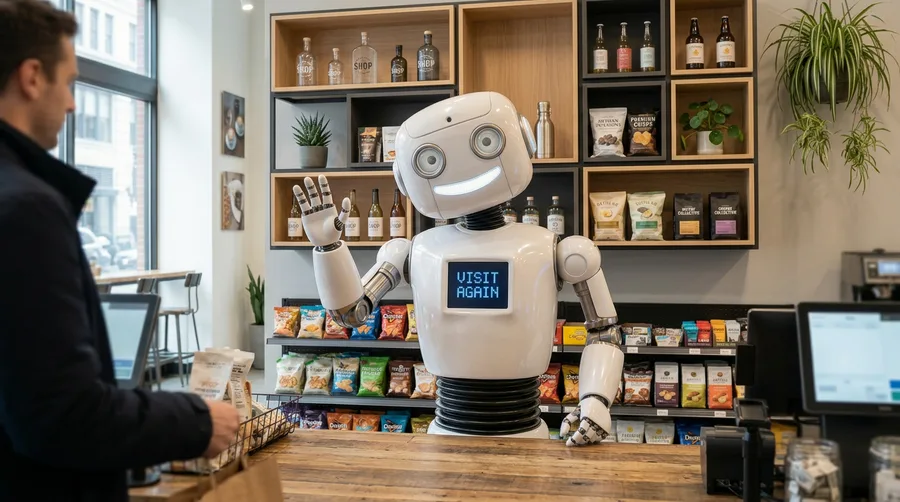
Perhaps the most significant shift is in how the store itself is being zoned.The traditional single-purpose floor plan is giving way to hybrid models where brand storytelling, product interaction, and logistics coexist under one roof. Showroom zones designed for discovery sit alongside micro-fulfillment areas optimized for same-day dispatch. Smaller, neighborhood-scale formats, shaped by local demand data rather than one-size-fits-all rollouts, are replacing the assumption that bigger footprint means better performance.
But before any of this can land, the industry needs to confront a more fundamental question: what is a store, physically, in 2025? The four-wall box with a shopfront and a backroom was designed for an era when retail had one job. That job has fractured.
A single location is now expected to function as a brand stage, a logistics node, a content studio, a community venue, and a commercial transaction point, often simultaneously. The physical form of retail has not kept pace with this expansion of purpose.
Most stores are still shaped by floor plans inherited from decades of repetition, and the gap between what the environment is asked to do and what it was built to do is widening. Closing that gap is not a matter of installing new technology into old shells. It demands a rethinking of retail architecture from the program level up: how space is divided, how it flows, how it adapts, and who it is ultimately designed to serve.
The future retail environment is not a single format. It is a system of formats, each calibrated to a specific role within a larger commercial ecosystem, and the organizations that understand this early will be the ones that shape what comes next.